Mount Kenya National Park
Africa's second-highest peak with glacial valleys, alpine meadows, and unique high-altitude wildlife. A UNESCO World Heritage Site.
About Mount Kenya National Park
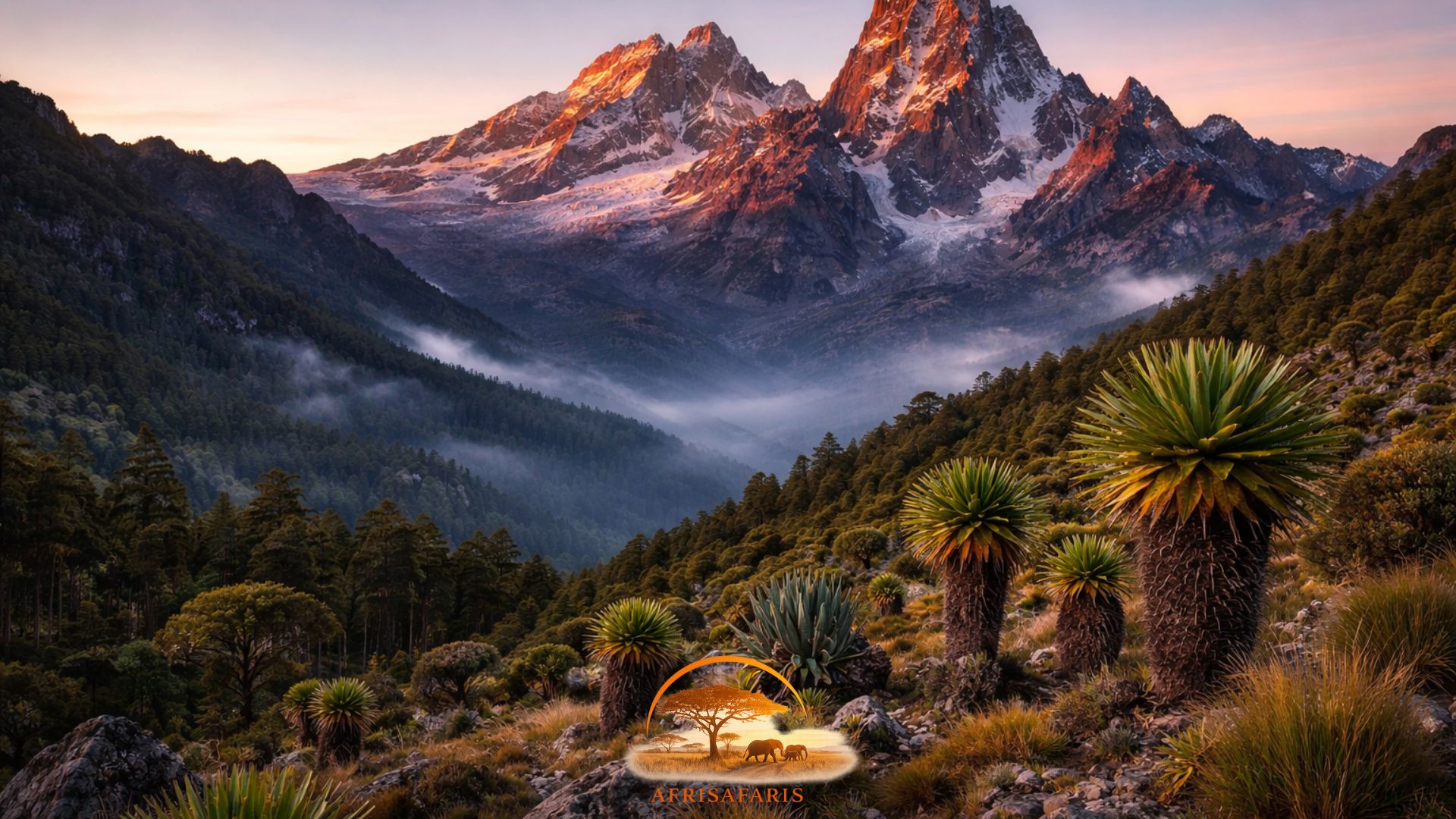
Mount Kenya National Park protects Africa's second-highest mountain (5,199m at Batian peak), a UNESCO World Heritage Site and the mountain from which Kenya takes its name. The extinct stratovolcano rises dramatically from surrounding farmland, its jagged peaks and glaciers visible from over 100 kilometres away.
The park encompasses remarkable ecosystems in altitudinal zones: dense montane forest (2,000–3,000m) gives way to bamboo, then open moorland with giant lobelias and groundsels found nowhere else on Earth. Above 4,500m, the landscape becomes rock, ice, and thin air, with retreating glaciers.
The mountain offers both technical climbing (Batian and Nelion peaks) and non-technical trekking (Point Lenana at 4,985m is accessible to fit hikers). The lower forests are home to elephants, buffaloes, leopards, giant forest hogs, and abundant birdlife.
Highlights
Quick Facts
Available Safari Packages
Explore our curated safari packages that include Mount Kenya National Park
History & Culture
Discover the rich heritage and cultural significance of Mount Kenya National Park
Sacred Mountain of the Kikuyu
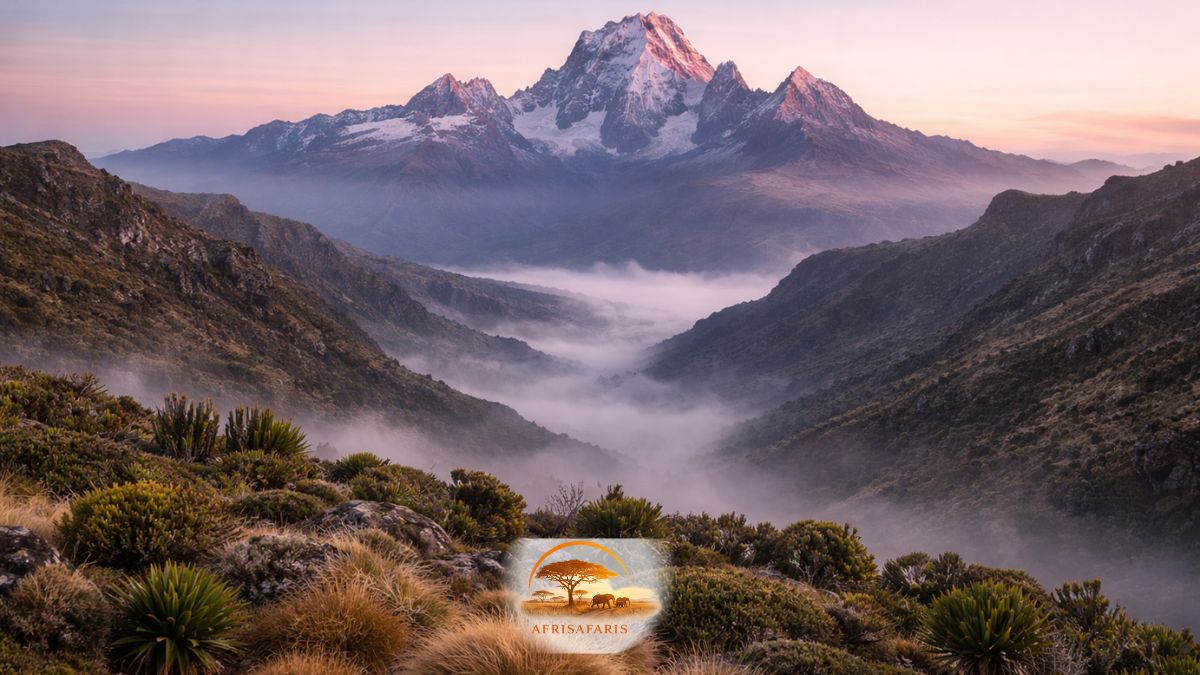
Mount Kenya, known as "Kirinyaga" (place of whiteness) in Kikuyu, holds deep spiritual significance. In Kikuyu tradition, the mountain is the earthly dwelling of Ngai (God), and people build homes facing it as reverence. The creation myth holds that Ngai created the first man and woman, Gikuyu and Mumbi, on the summit.
First Ascents and Exploration
European explorers first spotted Mount Kenya in 1849 when German missionary Johann Ludwig Krapf reported seeing snow on the equator — a claim widely ridiculed. Batian was first summited in 1899 by Halford Mackinder. Point Lenana is named after a Maasai chief. The country itself was named after the mountain — "Kenya" is an anglicisation of "Kirinyaga."
Wildlife & Animals
Discover the incredible wildlife that calls Mount Kenya National Park home
Elephants
Forest elephants inhabit the montane zone, occasionally spotted crossing trails at 2,000–3,000m.
Buffalos
Large herds graze in forest clearings and the bamboo zone.
Leopards
A healthy population inhabits the forests, though sightings require patience.
Giant Forest Hogs
The world's largest pig species — shy and rarely seen but present in significant numbers.
Colobus Monkeys
Black-and-white colobus monkeys are commonly seen in the montane forest canopy.
Sunbirds
Several endemic and near-endemic bird species adapted to the Afro-alpine environment.
Safari Activities
Experience the best of Mount Kenya National Park with these amazing activities
Point Lenana Trek
A 3–5 day trek to the third-highest peak (4,985m), accessible without technical climbing.
Technical Climbing
Batian (5,199m) and Nelion (5,188m) offer challenging rock and ice routes.
Nature Walks
Guided walks through ancient montane forest with elephants, buffalo, and 130+ bird species.
Trout Fishing
Clear mountain streams stocked with brown and rainbow trout for excellent fly fishing.
Where to Stay
Choose from a variety of accommodation options in Mount Kenya National Park
Serena Mountain Lodge
At 2,134m in the forest, built around a natural waterhole that attracts wildlife at night.
Mountain Huts (Trekking)
Basic high-altitude huts along trekking routes including Old Moses Camp and Shipton's Camp.
Did You Know?
Fascinating facts about Mount Kenya National Park that will amaze you
Mount Kenya is Africa's second-highest mountain at 5,199 metres — the mountain from which Kenya takes its name.
The Kikuyu people believe it is the dwelling place of God (Ngai) and build their homes facing the mountain.
When Europeans first reported equatorial snow in 1849, they were ridiculed — it took decades for the mountain to be accepted.
Its glaciers are retreating rapidly — scientists estimate they could disappear within 20–30 years.
Giant lobelias and groundsels in the Afro-alpine zone can grow up to 6 metres tall and exist nowhere else.
Point Lenana (4,985m) can be reached by fit hikers in 3–5 days without technical equipment.
The extinct stratovolcano last erupted approximately 3.1 million years ago — its original summit may have exceeded 6,500m.
Its forests supply water to over 7 million people, making the mountain critical for Kenya's water security.