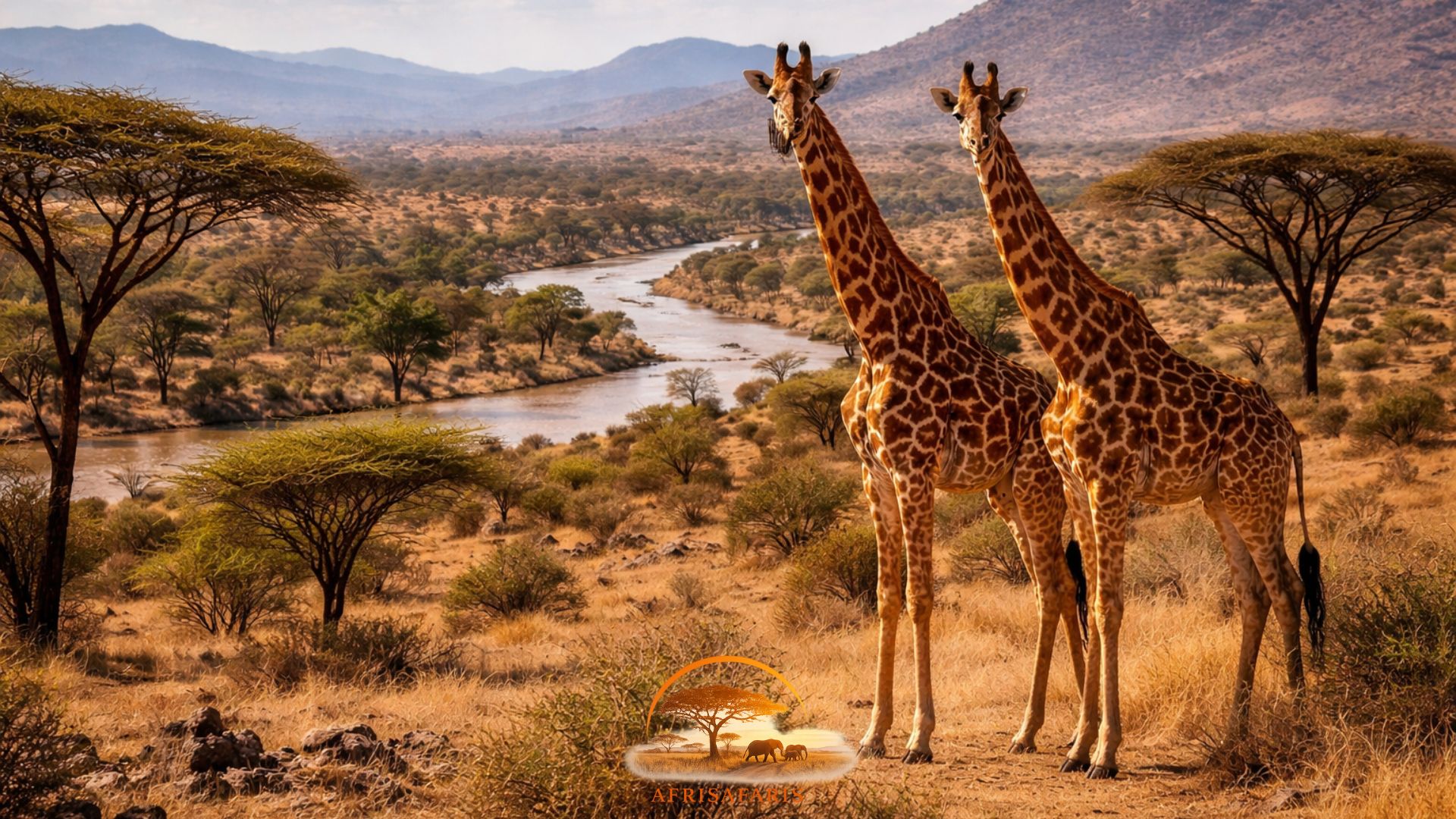
Samburu National Reserve
Remote, rugged reserve home to unique northern species found nowhere else in southern Kenya. The Ewaso Ng'iro River attracts spectacular wildlife.
About Samburu National Reserve
Samburu National Reserve, in the semi-arid scrublands of northern Kenya, offers a safari experience markedly different from the parks of the south. Covering 165 square kilometres along the Ewaso Ng'iro River ("brown water" in the Samburu language), the reserve features dramatic rocky hills, termite mounds, and arid bush dotted with doum palms.
Samburu is celebrated for its "Special Five" — five species found in Kenya only in the dry northern regions: the reticulated giraffe (with striking geometric markings), Grevy's zebra (the largest and most endangered zebra), the Beisa oryx, the Somali ostrich (with blue legs), and the gerenuk ("giraffe gazelle" that stands on its hind legs to browse).
The Ewaso Ng'iro River is the reserve's lifeline, attracting elephants, buffalo, lions, leopards, and crocodiles. Leopards are particularly well-known here — several habituated individuals offer exceptional sightings. Joy Adamson of "Born Free" fame spent years in the Samburu area working with cheetahs and leopards.
Highlights
Quick Facts
Available Safari Packages
We're currently preparing exciting safari packages for Samburu National Reserve
Packages Coming Soon
We're crafting amazing safari experiences for Samburu National Reserve. Contact us for custom itineraries!
Enquire NowHistory & Culture
Discover the rich heritage and cultural significance of Samburu National Reserve
The Samburu People
The Samburu are a Nilotic people closely related to the Maasai, sharing the Maa language and many traditions. However, the Samburu have retained a more traditional lifestyle, with many communities still practicing semi-nomadic pastoralism. Samburu warriors (morans) are famous for their beaded necklaces, ochre-red hair, and elaborate ceremonies. Their economy, social status, and marriage traditions revolve around cattle and camels.
Joy Adamson and Born Free
The Samburu region was home to Joy Adamson, who raised the lioness Elsa and wrote "Born Free" (1960). Adamson later worked with cheetahs and leopards here, establishing the Elsa Trust. Her work brought global attention to Kenya's wildlife and helped spark the modern conservation movement. She was murdered near Samburu in 1980, but her legacy continues through conservation efforts in the region.
Wildlife & Animals
Discover the incredible wildlife that calls Samburu National Reserve home
Reticulated Giraffes
Found only in northern Kenya, with striking geometric markings different from the Masai giraffe.
Grevy's Zebras
The largest and most endangered zebra species — Samburu is one of its last strongholds.
Gerenuks
The "giraffe gazelle" — stands upright on hind legs to browse high branches.
Beisa Oryx
A striking antelope with long, straight horns — part of the Samburu Special Five.
Leopards
Several habituated leopards make Samburu one of Africa's best spots for leopard photography.
Elephants
Large herds of desert-adapted elephants congregate along the river during dry season.
Lions
Several prides patrol the reserve, sometimes spotted resting on iconic rock outcrops.
Safari Activities
Experience the best of Samburu National Reserve with these amazing activities
Game Drives
Morning and afternoon drives to spot the Special Five and big cats along the river.
Cultural Visits
Visit a traditional Samburu manyatta to learn about their semi-nomadic lifestyle and beadwork.
Bird Watching
Over 450 species including vulturine guineafowl, golden-breasted starling, and Somali ostrich.
Camel Treks
Guided camel-back treks through the bush — a traditional Samburu transport method.
Night Drives
Nocturnal drives revealing aardvarks, genets, and African wild cats.
Where to Stay
Choose from a variety of accommodation options in Samburu National Reserve
Saruni Samburu
Luxury hilltop lodge with infinity pool, spa, and sweeping reserve views.
Samburu Sopa Lodge
Riverside lodge with rooms along the Ewaso Ng'iro River.
Did You Know?
Fascinating facts about Samburu National Reserve that will amaze you
Samburu is home to the "Special Five" — species found nowhere else in southern Kenya: reticulated giraffe, Grevy's zebra, Beisa oryx, gerenuk, and Somali ostrich.
The Ewaso Ng'iro River means "brown water" in the Samburu language — it's the lifeline of an otherwise arid landscape.
Grevy's zebra, found in Samburu, is the most endangered zebra species — fewer than 2,500 remain in the wild.
Joy Adamson of "Born Free" fame lived and worked in the Samburu area.
Samburu warriors use red ochre mixed with animal fat to style their hair — a tradition dating back centuries.
Samburu is one of the best places in Africa for leopard sightings — several individuals completely ignore safari vehicles.
The ancient fossil site of Koobi Fora lies further north in Samburu County near Lake Turkana.
The reserve is named after the Samburu people, who are closely related to the Maasai.