Serengeti National Park
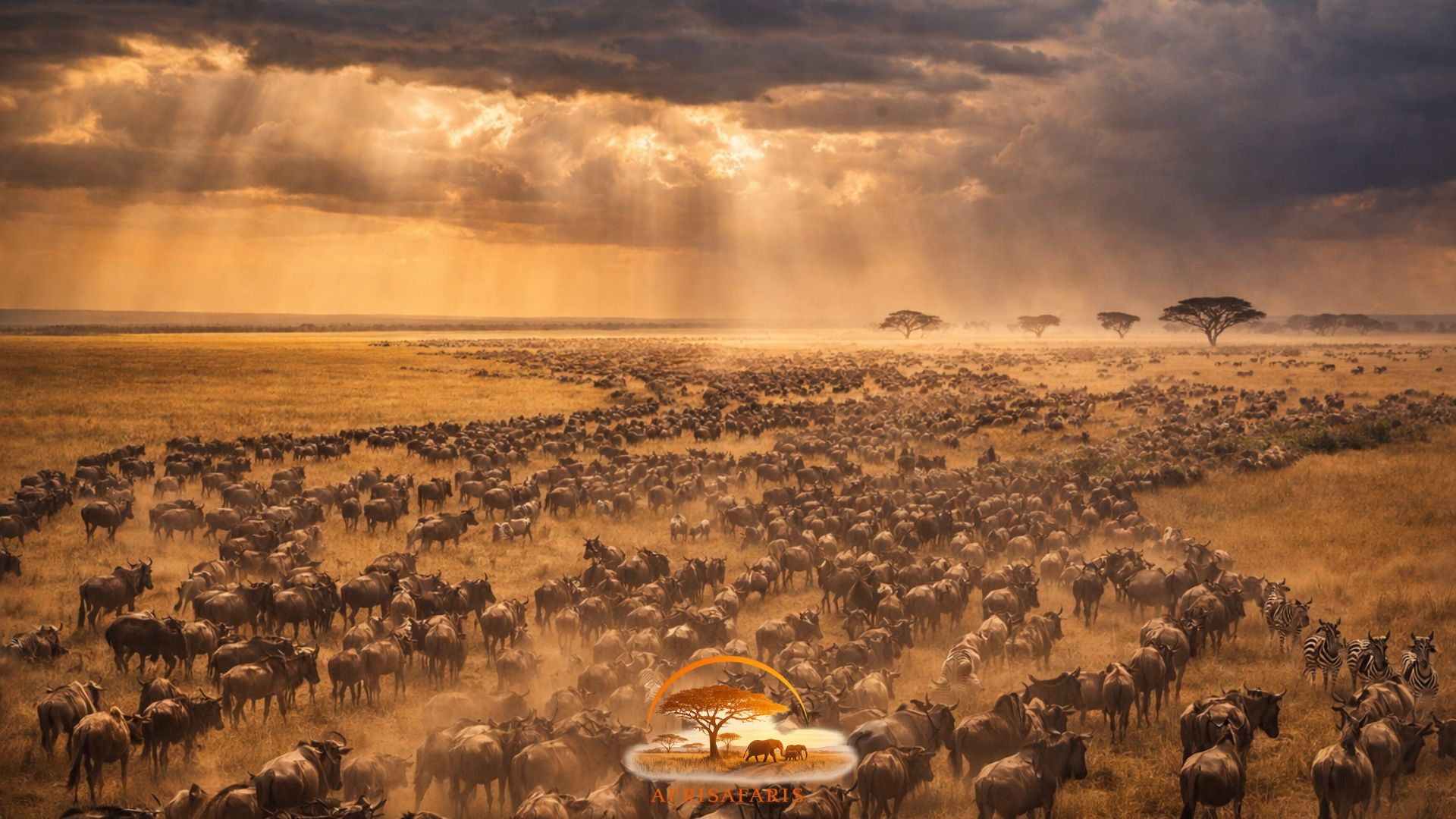
The legendary Serengeti — home to the Great Migration's calving season and one of the greatest concentrations of wildlife on the planet.
About Serengeti National Park
The Serengeti National Park, covering 14,763 square kilometres of northern Tanzania, is arguably the most famous wildlife sanctuary on Earth. Its name, from the Maasai word "Siringet" meaning "the place where the land runs on forever," perfectly describes the endless grass plains stretching to every horizon.
The Serengeti is the southern anchor of the Great Migration — the calving grounds where over 500,000 wildebeest are born in a dramatic three-week period between January and March. As the dry season progresses, herds move north, eventually crossing the Mara River into Kenya's Masai Mara before returning south with the rains. This cycle has been repeating for over a million years.
The park holds the greatest concentration of large mammals on Earth: over 3,000 lions, 1,000 leopards, 8,000 elephants, and 500 cheetahs, alongside vast herds of zebras, gazelles, topi, and eland. The diverse habitats — from short-grass plains to wooded hills, kopjes, and riverine forests — support extraordinary diversity of life.
Highlights
Quick Facts
Available Safari Packages
We're currently preparing exciting safari packages for Serengeti National Park
Packages Coming Soon
We're crafting amazing safari experiences for Serengeti National Park. Contact us for custom itineraries!
Enquire NowHistory & Culture
Discover the rich heritage and cultural significance of Serengeti National Park
Discovery and Conservation
The Serengeti was first brought to Western attention by German colonial officer Fritz Jaeger in 1913. In 1929, a partial game reserve was established, upgraded to a national park in 1951. Frankfurt Zoo director Bernhard Grzimek and his son conducted the first aerial migration survey, resulting in the Oscar-winning documentary "Serengeti Shall Not Die" (1959). Their work galvanised international support, leading to UNESCO World Heritage designation in 1981.
The Maasai and the Serengeti
Before the park, the Serengeti was traditional Maasai grazing land. The 1951 establishment displaced communities to the Ngorongoro Conservation Area. This history of displacement remains sensitive, and modern approaches increasingly emphasize community involvement and benefit-sharing in wildlife tourism.
Wildlife & Animals
Discover the incredible wildlife that calls Serengeti National Park home
Lions
Over 3,000 lions — the largest population in Africa — including famous prides studied for decades.
Leopards
An estimated 1,000 leopards, often spotted draped across sausage tree branches along the Seronera River.
Cheetahs
Approximately 500 cheetahs roam the open plains, making the Serengeti ideal for cheetah sightings.
Elephants
Over 8,000 elephants range across the park, concentrated in western and northern corridors.
Wildebeest
The star of the Migration — over 1.5 million follow an ancient circular route through the ecosystem.
Hippos
Large pods inhabit the Grumeti and Mara rivers, providing dramatic viewing during crossings.
Safari Activities
Experience the best of Serengeti National Park with these amazing activities
Game Drives
All-day drives across vast plains tracking migration herds and big cat prides.
Hot Air Balloon Safaris
Float over the Serengeti at dawn for unparalleled aerial views of wildlife and endless plains.
Walking Safaris
Guided bush walks in designated areas for an intimate ground-level perspective.
Cultural Visits
Visit Maasai communities on the park's borders.
Photography
Vast landscapes and abundant wildlife make this one of the world's premier photography destinations.
Where to Stay
Choose from a variety of accommodation options in Serengeti National Park
Four Seasons Safari Lodge
Ultra-luxury lodge with an infinity pool overlooking a wildlife waterhole.
Serengeti Serena Safari Lodge
Award-winning lodge with traditional Maasai-inspired architecture.
Serengeti Heritage Tented Camp
Mobile camp that moves with the migration.
Did You Know?
Fascinating facts about Serengeti National Park that will amaze you
"Serengeti" comes from the Maasai "Siringet," meaning "the place where the land runs on forever."
The Serengeti hosts Africa's highest concentration of large predators: 3,000+ lions, 1,000 leopards, 500 cheetahs.
Over 500,000 wildebeest calves are born in just three weeks (January–February) in the southern Serengeti.
The Oscar-winning documentary "Serengeti Shall Not Die" (1959) was instrumental in saving the park.
Granite kopjes scattered across the plains serve as lookout points for lions and shelter unique micro-ecosystems.
The Serengeti is both a UNESCO World Heritage Site and a Biosphere Reserve.
The ecosystem supports over 500 bird species, 70 large mammal species, and ~2 million large herbivores.
Balloon safaris cost approximately $500–$600 per person but are one of the world's most spectacular wildlife experiences.
The Great Migration is estimated to be over 1 million years old.
The Serengeti research station has produced more scientific publications about African wildlife than any other location.