Zanzibar
The legendary Spice Island — pristine beaches, UNESCO Stone Town heritage, spice plantations, and vibrant Swahili culture.
About Zanzibar
Zanzibar — the very name conjures images of exotic spices, tropical beaches, and maritime adventure. This semi-autonomous archipelago off Tanzania consists of Unguja and Pemba islands and dozens of smaller islets, forming one of the Indian Ocean's most captivating destinations with over 2,000 years of civilisation.
Stone Town, the old quarter of Zanzibar City, is a UNESCO World Heritage Site. This labyrinthine quarter of coral stone buildings, narrow alleyways, ornate wooden doors, and bustling bazaars reflects centuries of cultural exchange between African, Arab, Indian, and European traders. The Sultan's Palace, Old Fort, Anglican Cathedral (on the site of the last slave market), and House of Wonders are key landmarks.
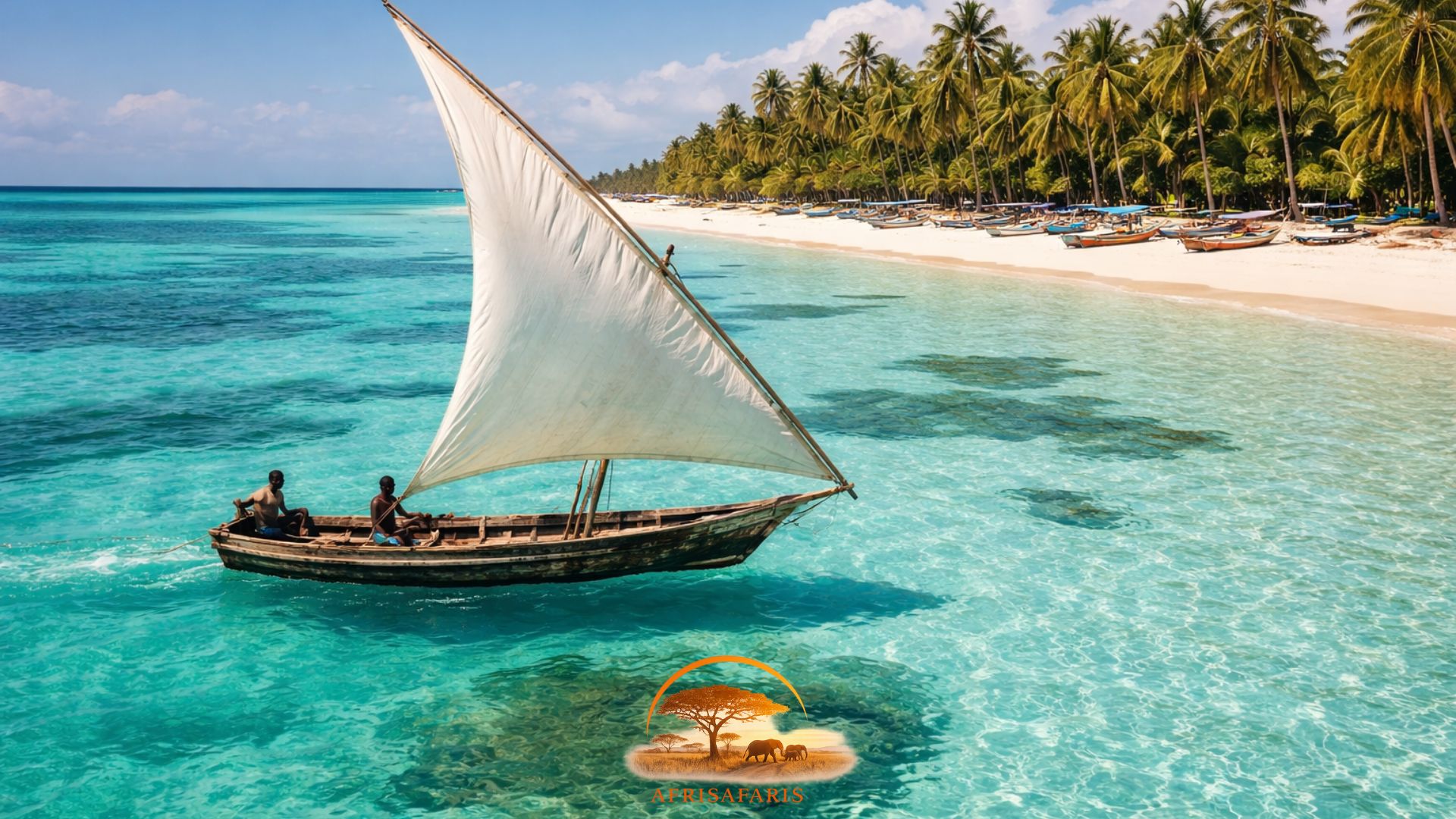
Beyond Stone Town, Zanzibar offers some of the Indian Ocean's most beautiful beaches — powdery white sand fringed by coconut palms and warm turquoise waters. The island's spice plantations — cloves, vanilla, cinnamon, nutmeg, and black pepper — can be explored on guided "spice tours." Zanzibar is the perfect post-safari beach destination and a cultural experience in its own right.
Highlights
Quick Facts
Available Safari Packages
We're currently preparing exciting safari packages for Zanzibar
Packages Coming Soon
We're crafting amazing safari experiences for Zanzibar. Contact us for custom itineraries!
Enquire NowHistory & Culture
Discover the rich heritage and cultural significance of Zanzibar
Crossroads of Civilisation
Zanzibar has been a hub of Indian Ocean trade for over 2,000 years. Phoenician, Persian, Arab, and Indian traders established commerce connecting East Africa to the Persian Gulf, India, and China. By the 10th century, it was a prosperous Swahili city-state. The Portuguese arrived in 1498, the Omani Arabs took control in 1698, and the British established a protectorate in 1890.
The Slave Trade and Its Legacy
Zanzibar was the centre of the East African slave trade for over two centuries. At its peak, an estimated 50,000 enslaved people per year passed through the slave market. The trade was abolished in 1873. The Anglican Cathedral was built on the site of the old market — its altar stands where the whipping post once stood. The former slave chambers are preserved as a memorial.
The Spice Island
Zanzibar earned its "Spice Island" reputation in the 19th century when Sultan Seyyid Said introduced clove cultivation from Indonesia. Within decades, it became the world's largest clove producer. The spice trade attracted Indian merchants and transformed the economy. Today, the island still produces cloves, vanilla, cinnamon, nutmeg, black pepper, cardamom, and lemongrass.
Wildlife & Animals
Discover the incredible wildlife that calls Zanzibar home
Red Colobus Monkeys
The Zanzibar red colobus, found only on Unguja, is one of Africa's rarest primates with fewer than 6,000 remaining.
Dolphins
Bottlenose and humpback dolphins are commonly spotted off the southern coast near Kizimkazi.
Sea Turtles
Green turtles nest on beaches, and Mnarani Marine Turtle Conservation offers close encounters.
Whale Sharks
Between October and March, whale sharks gather off the coast, attracting snorkellers worldwide.
Tropical Fish & Coral
Mnemba Atoll's reefs are among East Africa's best dive sites.
Safari Activities
Experience the best of Zanzibar with these amazing activities
Stone Town Walking Tour
Guided exploration of the UNESCO old quarter, its markets, and historical landmarks.
Spice Tour
Visit working plantations to see, smell, and taste cloves, vanilla, cinnamon, and nutmeg.
Snorkelling & Diving
Explore coral reefs around Mnemba Atoll with tropical fish, dolphins, and sea turtles.
Jozani Forest Visit
Trek through the last remaining indigenous forest to see the endemic red colobus monkey.
Dhow Sunset Cruise
Sail aboard a traditional dhow as the sun sets over Stone Town.
Beach Relaxation
From Nungwi's white sands to Paje's kite surfing lagoon, beaches for every taste.
Where to Stay
Choose from a variety of accommodation options in Zanzibar
Park Hyatt Zanzibar
Stone Town's premier luxury hotel in a restored historic building overlooking the waterfront.
Diamonds Star of the East
Exclusive Nungwi beachfront resort with overwater restaurant and world-class spa.
Zanzibar Serena Hotel
Historic waterfront hotel with Swahili-inspired décor and harbour views.
Did You Know?
Fascinating facts about Zanzibar that will amaze you
Stone Town is a UNESCO World Heritage Site — a remarkably intact 19th-century Swahili trading town.
Freddie Mercury (born Farrokh Bulsara) was born in Stone Town in 1946. His childhood home is now a museum.
At its peak, Zanzibar's slave market processed an estimated 50,000 enslaved people per year.
Zanzibar was once the world's largest producer of cloves, and the spice still permeates the air.
The Zanzibar red colobus monkey exists nowhere else on Earth, with fewer than 6,000 remaining.
Stone Town has over 500 ornately carved wooden doors, each telling the owner's story.
Zanzibar held the shortest war in history — the Anglo-Zanzibar War of 1896 lasted 38–45 minutes.
The House of Wonders (1883) was the first building in East Africa with electricity and an elevator.
Mnemba Atoll's waters are consistently ranked among the world's top 10 dive sites.
Forodhani Gardens night market is famous for street food — fresh seafood, Zanzibar pizza, and spiced coffee.